
 Laser removal
How many sessions does tattoo and PMU removal take
The most common question at consultations. No one can give an exact number before an assessment, but there are clear guidelines. Here is what the number of sessions depends on and why they can't be closer together.
Estimated number of sessions
| What we remove | Sessions | Interval |
|---|---|---|
| Brow PMU | 2–4 | 4–6 weeks |
| Brow tails or edges | 1–3 | 4–6 weeks |
| Lash line, eyeliner | 2–3 | 4–6 weeks |
| Lip PMU | 2–4 | 4–6 weeks |
| Remover (brows, lips) | 1–3 | 6–8 weeks |
| Amateur tattoo | 3–6 | 6–8 weeks |
| Professional black tattoo | 6–10 | 6–8 weeks |
| Colour tattoo | 8–12 | 6–8 weeks |
| Fading for a cover-up | 2–4 | 6–8 weeks |
These are averages from practice. Some people finish sooner, others need 1–2 extra sessions. After the first procedure the forecast usually becomes much more precise: we see how your pigment and your skin respond to the laser.
Why PMU goes faster than tattoos
Permanent makeup is placed shallowly and contains far less pigment than a tattoo. Over the years part of it has also faded on its own. Tattoos are packed densely and deeper, often in several passes, so they take longer.
Amateur tattoos usually go faster than professional ones: there's less ink, and it's unevenly spread. Professional work is dense and even, often with durable high-quality inks, so it needs more sessions.
What increases the number of sessions
- Several layers of pigment. For example, the PMU was covered twice or touched up over the old one.
- Dense professional work. The more ink in the skin, the more work for the body.
- Difficult colours. Green, turquoise, yellow and light blue clear more slowly than black.
- Location. On hands, feet and ankles circulation and lymph flow are weaker, so pigment leaves more slowly.
- Lifestyle. Smoking, lack of sleep and inactivity slow metabolism and pigment clearance.
- Tan. Tanned skin needs gentler settings and sometimes a break in the course.
What reduces the number of sessions
- old, partly faded PMU;
- black, grey or blue pigment — the 1064 nm wavelength targets it well;
- good aftercare, with no breaks because of irritation;
- a steady schedule without long gaps.
Why sessions can't be more frequent
The laser only breaks up the pigment. Immune cells and the lymphatic system clear it, and that takes weeks. If you come back after 2 weeks instead of 5, the laser hits pigment the body hasn't cleared yet. The result won't come any faster.
But the load on the skin grows. It doesn't have time to recover, and the risk of irritation, pigmentation or even scarring goes up. So we never schedule sessions more often than the skin allows, even if a client is in a hurry.
What progress looks like
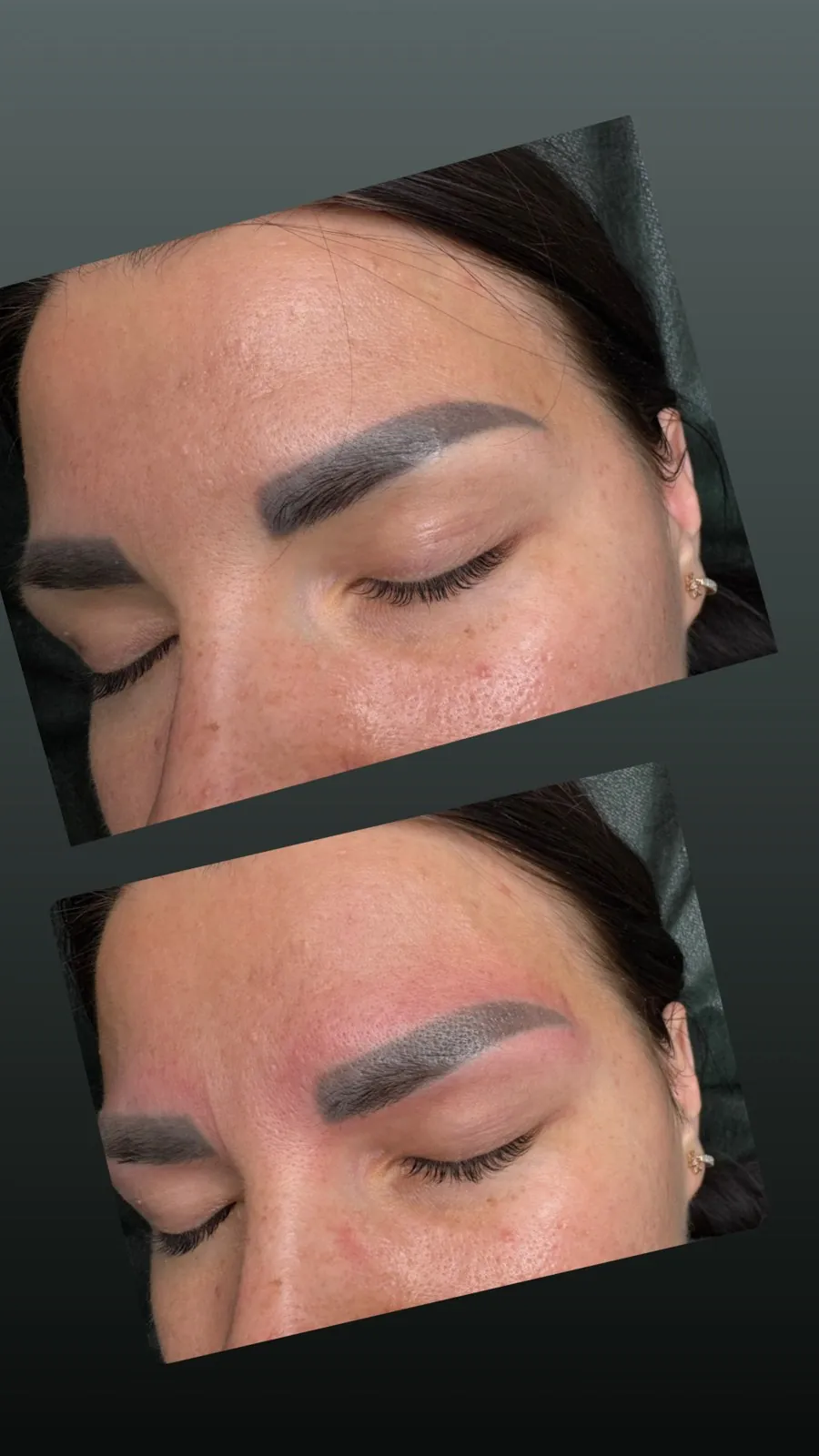
Right after a session the area turns whitish — a normal reaction that fades in 15–30 minutes. Then there may be 1–2 days of redness and mild swelling. The real result shows after 3–6 weeks: the pigment fades gradually, "from the inside".
We photograph the area before every session under the same conditions, so you see real progress rather than relying on impressions.
How to speed up results
- drink enough water and stay active — lymph flows better;
- don't tan the treated area and use SPF 50;
- don't postpone scheduled sessions for long;
- follow aftercare so you don't need a break because of irritation;
- if possible, stop smoking during the course.
Can it be done in one session?
Sometimes: a small light remnant, a thin tail or old faded pigment can go in one procedure. But we won't promise "in one go" before an assessment. An honest forecast is better than disappointment a month later.
FAQ
Can I reduce the number of sessions by raising the laser power?
No. Too much energy raises the risk of burns and scars, and pigment doesn't clear any faster. We set parameters based on how the skin responds.
Can I take a break in the course?
Yes, for example over the summer. Pigment keeps clearing during the break. Just don't tan the area, and come back when the skin is light.
What if the result is weak after 3 sessions?
We review the plan: some pigment may be warm and respond better to the remover, or a longer interval may be needed. That's why we photograph progress before every session.
Does the age of the PMU matter?
Yes. Old PMU has often faded partly and is easier to remove. Fresh dense pigment needs more sessions.
Prices are on the prices page. To get an estimate for your case, send a photo of the area in daylight.